The aviation industry never stands still. Just when carriers establish a steady rhythm, external factors shift the tempo. From fluctuating fuel costs to the rapid evolution of passenger preferences, airlines must constantly adapt their networks to survive and thrive. This adaptability, driven by route development trends, is the core of modern network planning.
For industry professionals and stakeholders, understanding the latest route development trends is not just about keeping up with the news. It is about anticipating where the next opportunities lie. At BlueX GSSA, we see firsthand how these shifts impact market entry and profitability. This post explores the critical factors reshaping the skies in 2026 and beyond, offering insights into how airlines are optimizing their networks for a complex future.
The Data Revolution in Network Planning
Gone are the days when network planners relied solely on historical data and gut instinct. While historical load factors are still important, they are no longer the primary driver for opening new destinations. One of the most significant route development trends we are seeing is the aggressive adoption of predictive analytics and artificial intelligence.
Moving Beyond Historical Data
Traditional planning often looked at “what happened last year.” Today, successful carriers look at “what will happen next month.” By integrating non-traditional data sources—such as internet search volumes, credit card spending patterns, and even social media sentiment—airlines can identify demand before a ticket is ever booked.
For example, a spike in searches for a specific holiday destination can trigger a carrier to deploy seasonal capacity weeks faster than competitors. This agility allows airlines to align with current route development trends and capture market share in emerging hotspots before they become saturated.
Real-Time Demand Sensing
Technology now allows for real-time demand sensing. Algorithms can adjust pricing and capacity on specific routes almost instantaneously. If a major event is announced in a city, airlines can upgrade aircraft size or add frequencies within hours. This level of responsiveness is vital. According to recent reports on modernization, breaking down silos between commercial planning and operations is essential for efficiency. You can read more about modernizing airline planning at McKinsey & Company.
Sustainability Shaping the Map
Sustainability is no longer just a corporate social responsibility buzzword; it is a hard operational constraint. Environmental regulations and passenger awareness are forcing a fundamental rethink of network structures. Among the current route development trends, the “green factor” is perhaps the most disruptive.
Regulatory Pressures and Short-Haul Bans
Governments, particularly in Europe, are taking strict measures to reduce aviation emissions. We have already seen initiatives to ban short-haul flights where a viable train alternative exists. This forces airlines to rethink their domestic feeder networks. Instead of flying passengers from a secondary city to a major hub, airlines are partnering with rail operators to provide that connection. These route development trends highlight how this intermodal approach is changing the way airlines calculate the profitability of a route.
The SAF Corridor Influence
As Sustainable Aviation Fuel (SAF) becomes more critical, one of the key route development trends is that viability may soon depend on where SAF is available. Airlines looking to meet strict decarbonization targets might prioritize routes between hubs that offer reliable SAF supplies. This creates “green corridors” where flight operations are environmentally optimized.
The International Civil Aviation Organization (ICAO) highlights that the deployment of SAF is key to long-term sustainability. We expect to see network planners prioritizing airports that invest in this infrastructure, effectively redrawing the map based on fuel availability rather than just passenger demand.
The Rise of Secondary Cities and Point-to-Point Travel
For decades, the hub-and-spoke model dominated aviation. While mega-hubs aren’t disappearing, there is a clear shift toward decentralization. One of the accelerating route development trends is the focus on secondary cities and direct, point-to-point connections.
Bypassing Congested Mega-Hubs
Passengers generally despise layovers. They add time, stress, and the risk of lost luggage. Recognizing this, airlines are increasingly looking at connecting secondary cities directly. For instance, rather than funneling all traffic through London Heathrow or New York JFK, carriers are exploring direct links between cities like Manchester and Boston, or Lyon and Dubai.
This strategy, a key component of current route development trends, alleviates pressure on congested major airports and reduces slot costs for airlines. It also stimulates new demand. A direct flight often creates traffic that didn’t exist when the journey required a cumbersome connection.
The Evolution of “Bleisure” Travel
The line between business and leisure travel continues to blur. The “bleisure” traveler—someone who tacks a vacation onto a work trip—is driving demand for destinations that serve both corporate interests and tourism appeal. Route planners are noticing that strictly “business” routes are slower to recover than those offering a mix.
Consequently, we are seeing fewer frequencies on traditional “suit and tie” shuttle routes and more capacity on routes that serve tech hubs with high lifestyle appeal, such as Austin, Texas, or Lisbon, Portugal. These route development trends reflect a shift in business travel priorities.
Aircraft Technology Enabling New Markets
You cannot discuss route development trends without talking about the hardware. The aircraft available to airlines dictate where they can fly profitably. The entry of long-range narrowbody aircraft is a game-changer for network planners globally.
The Long-Haul Narrowbody Revolution
Aircraft like the Airbus A321XLR are redefining what is possible. These planes have the range to fly trans-Atlantic or deep intra-Asia routes but with the operating costs of a narrowbody. This allows airlines to open “thin” routes—markets with enough demand for 180 seats, but not enough to fill a 300-seat widebody.
Previously, these routes were unserved or required a stop. Now, an airline can profitably fly from Hamburg to Chicago or Dublin to Cleveland. This democratizes long-haul travel, bringing it to smaller airports and reducing the reliance on massive consolidation points.
Fleet Flexibility
Airlines are also moving toward simplified fleets to increase agility. By operating families of aircraft (like the 737 MAX family or the A320neo family), carriers can swap aircraft sizes based on daily demand without changing crews or maintenance protocols. This operational flexibility supports dynamic route development trends, allowing airlines to test new markets with lower risk. If a new route underperforms, they can downgrade the aircraft size rather than cancelling the service entirely.
Geopolitical Stability and Economic Resilience
The world is interconnected, and aviation is often the first industry to feel the tremors of geopolitical instability. Route planning in 2026 requires a high degree of geopolitical risk management.
Navigating Airspace Closures
Recent years have shown how quickly airspace can close due to conflict. Detours around closed airspace add flight time and fuel burn, turning a profitable route into a loss-maker overnight. Modern route development trends involve building redundancy into the network. Planners are now analyzing “what-if” scenarios for airspace closures to ensure they aren’t overly reliant on a single flight corridor.
Economic Shifts and Emerging Markets
While Western markets mature, growth engines are shifting. The Asia-Pacific region continues to lead global growth projections. According to the International Air Transport Association (IATA), the region is forecasting significant expansion in passenger traffic. Airlines are pivoting their focus toward India, Vietnam, and Indonesia, where a rising middle class is eager to travel.
Conversely, economic headwinds in other regions may suppress demand. Inflation impacts discretionary spending, meaning leisure routes to expensive destinations might soften. Airlines are countering this by targeting destinations where exchange rates favor the inbound traveler, effectively “importing” demand—a key strategy within current route development trends.
The Critical Role of Cargo Revenue
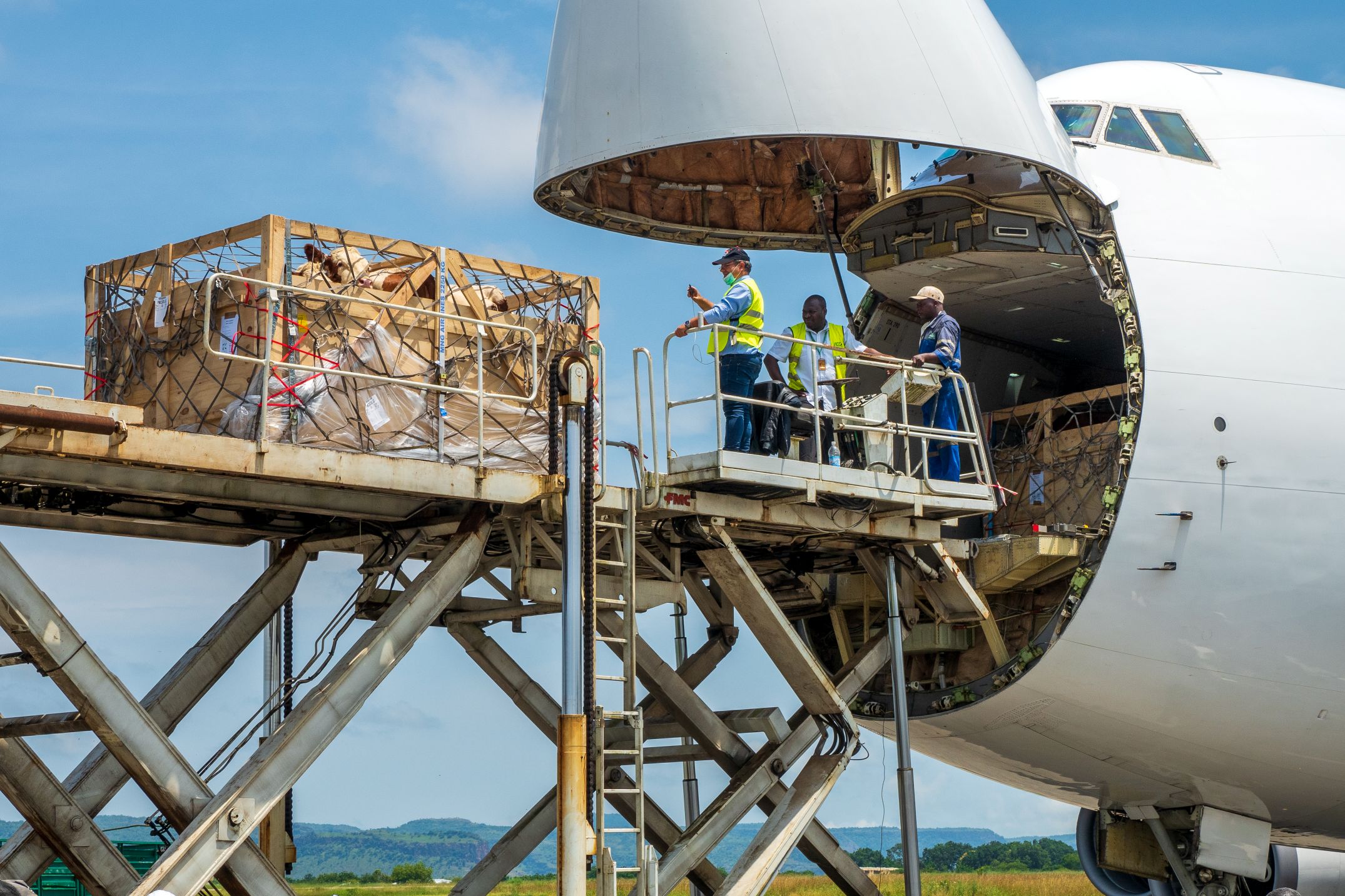
Often overlooked by passengers, cargo is a lifeline for route profitability. For many widebody flights, the passengers pay for the fuel, but the cargo in the belly provides the profit margin.
Cargo-Led Route Decisions
We are seeing more route development trends where cargo potential dictates the destination. A passenger route might look marginal on paper, but if that city creates high-yield pharmaceutical or technology exports, the route becomes viable.
At BlueX GSSA, we understand that a holistic view is necessary. Airlines are increasingly consulting with their cargo divisions before announcing new passenger services. This integrated approach ensures that the “belly space” is monetized effectively from day one. If a route cannot support healthy cargo loads, it faces a higher hurdle for approval in the boardroom.
Strategic Partnerships and Virtual Interlining
No airline can fly everywhere. To expand reach without deploying their own metal, carriers are doubling down on strategic partnerships.
Deepening Alliances
Codeshare agreements are becoming deeper and more complex. Joint Ventures (JVs) allow airlines to coordinate pricing and schedules as if they were a single entity. This allows a carrier to “serve” a market without ever landing there.
Virtual Interlining
A newer phenomenon is virtual interlining, often facilitated by travel tech companies. This connects two unrelated airlines on a single itinerary, with the tech provider guaranteeing the connection. This allows Low-Cost Carriers (LCCs) to feed traffic into legacy carrier networks without complex interline agreements. This expands the “virtual network” of an airline significantly, influencing route development trends by creating feed traffic from previously inaccessible regions.
Conclusion: Agility is the New Stability
The aviation landscape in 2026 is defined by complexity. The successful airlines are those that treat their networks as living organisms rather than static maps. By leveraging data, embracing sustainability, and utilizing capable new aircraft, carriers can find growth even in a challenging environment.
For General Sales and Service Agents (GSSAs) like us, these route development trends signal a need for greater expertise. Airlines need partners who understand not just sales, but the intricate dynamics of why a route exists and how to sustain it.
To stay ahead, airlines must:
- Invest in Data: Move from reactive to predictive planning.
- Prioritize Flexibility: Use aircraft that can serve multiple missions.
- Think Holistically: Consider cargo and sustainability in every route calculation.
The sky is vast, but the path to profitability is narrow. By watching these trends closely, aviation businesses can navigate the turbulence and land safely on the side of growth. Contact us today for more information.