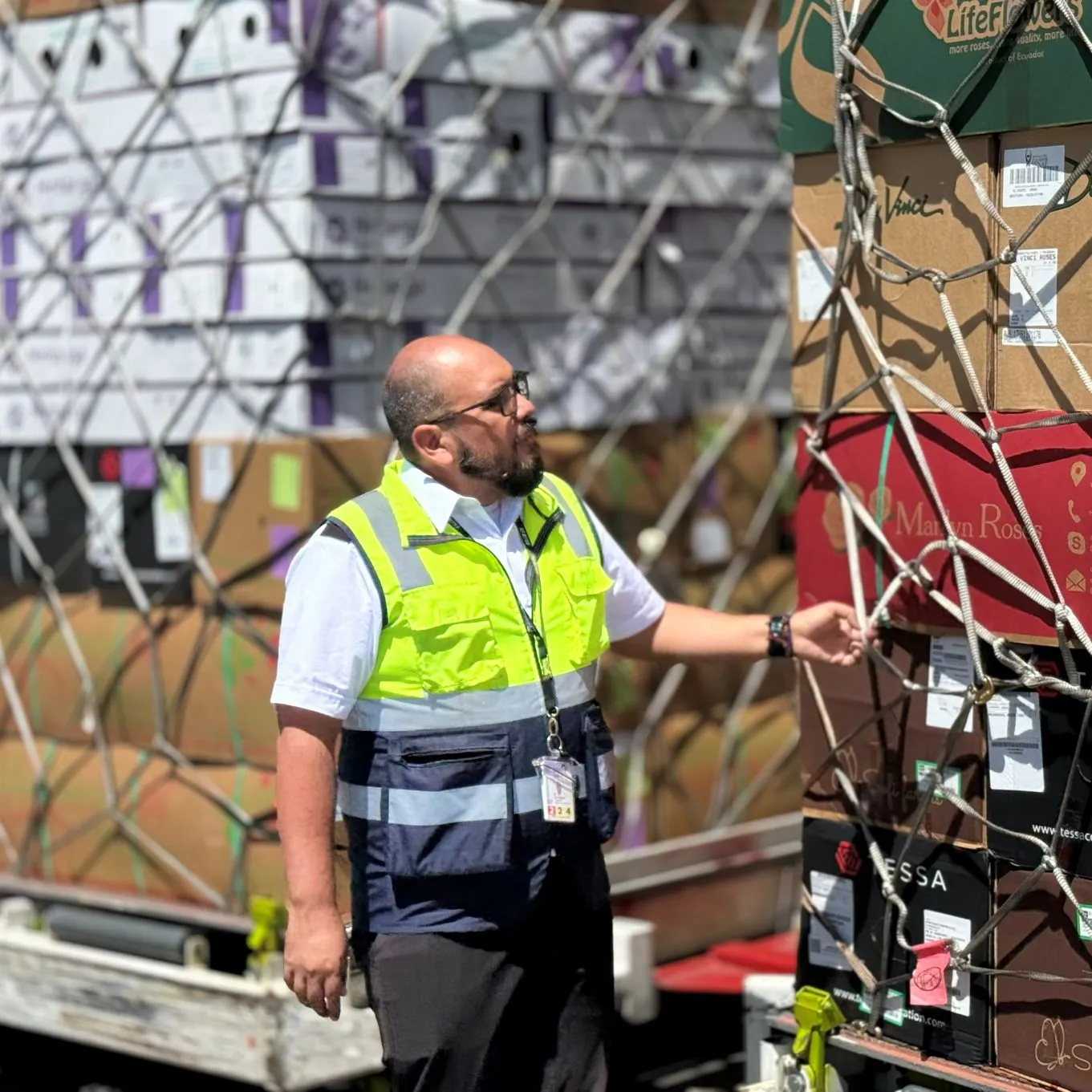
Air cargo charter networks are designed to move enormous volumes of freight efficiently through scheduled services. For most shipments, air cargo charter provides the right balance between speed, capacity, cost, and global connectivity.
But not every shipment fits a regular schedule.
A factory shutdown may require an urgent replacement component. An energy project may need oversized equipment transported directly to a remote market. A pharmaceutical shipment may have an extremely narrow delivery window. Humanitarian supplies may need to reach a destination where scheduled capacity is unavailable.
In situations like these, an air cargo charter can become more than an alternative transportation option. It can become a strategic supply chain solution.
Charter operations provide dedicated aircraft capacity based on specific cargo, routing, timing, and operational requirements. Instead of adapting the shipment to an existing airline schedule, the transportation solution can be structured around the shipment itself.
For airlines, GSSAs, freight forwarders, and shippers, understanding when air cargo charter solutions create greater value is increasingly important. In 2026, changing trade flows, geopolitical disruption, urgent technology shipments, and tight capacity across certain markets continue to reinforce the need for flexible air cargo charter options.
An effective air cargo charter strategy therefore begins with one question: when does controlling the capacity become more valuable than simply booking space?
What Is an Air Cargo Charter?
An air cargo charter is an arrangement in which dedicated aircraft capacity is secured for a specific shipment, customer, route, project, or operational requirement rather than relying exclusively on scheduled cargo capacity.
Depending on the requirement, a charter can involve the full capacity of a freighter aircraft and may be organized as a single mission or part of a longer-term program.
The principal advantage is control.
A charter solution can provide greater flexibility over:
- Departure timing
- Origin and destination
- Aircraft type
- Available capacity
- Cargo configuration
- Routing
- Operational planning
- Special handling requirements
That flexibility makes charter solutions particularly valuable when traditional scheduled services cannot adequately support the shipment.
The broader capacity challenge is becoming increasingly important. According to the International Air Transport Association (IATA), global air cargo demand increased 8.5% year over year in June 2026 while capacity grew 4.4%, demonstrating how demand can expand considerably faster than available supply.
Explore IATA’s June 2026 Air Cargo Market Update
When Does Dedicated Capacity Make Sense?
Chartering an aircraft is not automatically the right solution simply because a shipment is urgent.
The decision should consider the commercial consequences of delay, shipment dimensions, available scheduled capacity, routing options, handling requirements, and operational feasibility.
An air cargo charter becomes particularly compelling when the cost of supply chain disruption exceeds the premium associated with dedicated transportation.
Typical scenarios include:
- Production line emergencies
- Oversized industrial cargo
- Aerospace components
- Energy and infrastructure projects
- Humanitarian relief
- High-value technology
- Critical medical equipment
- Time-sensitive automotive shipments
The calculation is therefore not simply freight rate versus freight rate.
It is transportation cost versus total business risk.
Urgent Shipments and Production Line Emergencies
Few situations demonstrate the value of dedicated capacity more clearly than a production line shutdown.
Modern manufacturing systems frequently operate with limited inventory. If a critical component fails to arrive, production can slow or stop entirely.
The financial consequences may include:
- Lost production
- Labor costs
- Contract penalties
- Delayed customer deliveries
- Supply chain disruption
Under these circumstances, waiting for the next available scheduled flight may cost significantly more than securing an air cargo charter.
Dedicated capacity allows logistics teams to build the transportation plan around the urgency of the shipment rather than adapting to an existing schedule.
This is where air cargo becomes a business-continuity tool rather than simply a transportation service.
Oversized and Heavy Cargo
Scheduled aircraft capacity also has physical limitations.
Large machinery, industrial equipment, aerospace components, energy infrastructure, and other project cargo may exceed the dimensions or loading capabilities available on regular services.
A charter allows planners to evaluate aircraft specifically around the cargo.
Important considerations include:
- Shipment dimensions
- Weight
- Door dimensions
- Floor loading limitations
- Loading equipment
- Airport infrastructure
- Ground handling capabilities
Selecting the correct aircraft is therefore one of the most important elements of an air cargo charter operation.
The objective is not merely finding an aircraft with sufficient payload. The entire operational chain—from origin handling to destination unloading—must support the shipment.
Dedicated Capacity Creates Greater Schedule Control
Scheduled networks operate according to predetermined frequencies and routes. This creates efficiency, but it also means the shipper must adapt to the airline network.
Charter operations reverse that relationship.
When operationally feasible, departure times and routing can be structured around the customer’s requirements.
This can be particularly valuable when:
- Cargo cannot wait for the next scheduled service
- Multiple connections create excessive risk
- A destination has limited regular capacity
- Direct transportation significantly reduces transit time
Our GSSA capacity strategy article explains how airlines and representation partners maximize the value of available cargo space. Charter solutions extend that capacity conversation into situations where the customer requires dedicated access rather than shared scheduled capacity.
Specialized Cargo Can Require Dedicated Solutions
Some shipments demand more than speed.
Pharmaceuticals, high-value goods, sensitive technology, live animals, dangerous goods, and other specialized commodities may require additional security, handling, environmental, or operational controls.
An air cargo charter can provide greater control over the transportation environment when those requirements cannot be efficiently accommodated through scheduled capacity.
However, dedicated aircraft do not eliminate regulatory or handling requirements. Specialized shipments still require appropriate documentation, qualified personnel, compatible infrastructure, and compliance with applicable aviation regulations.
Our specialized cargo niches article explores why these commodities require more sophisticated logistics planning.
For dangerous goods requirements, airlines and logistics professionals can consult IATA’s industry guidance:
IATA Dangerous Goods Resources
Charters Can Support Supply Chains During Disruption
Global supply chains do not always operate under predictable conditions.
Geopolitical events, airport congestion, natural disasters, airspace restrictions, capacity reductions, and unexpected demand can disrupt traditional cargo networks.
Recent market conditions illustrate why flexibility matters. IATA’s 2026 market analysis has documented significant differences in demand and capacity across regions and trade lanes as airlines respond to changing operating conditions.
Review IATA’s Air Cargo Market Analysis
During severe disruption, an air cargo charter can help create alternative capacity when conventional routing no longer provides the required reliability.
This does not mean charter operations are immune to disruption. Airspace restrictions, airport limitations, crew requirements, permits, and aircraft availability still affect feasibility.
The advantage is flexibility in designing an alternative solution.
Why Aircraft Selection Matters
No single freighter aircraft is appropriate for every charter mission.
Aircraft selection depends on multiple factors, including:
- Cargo weight
- Dimensions
- Required range
- Airport runway limitations
- Loading method
- Payload requirements
- Ground handling infrastructure
- Route restrictions
A shipment may technically fit within an aircraft’s payload limit but still be unsuitable because of cargo-door dimensions or floor-loading restrictions.
This is why charter planning requires coordination between commercial and operational teams.
The most effective air cargo charter solution is not necessarily the largest aircraft available. It is the aircraft that best matches the cargo and mission requirements.
The GSSA Role in Charter Opportunities
Strategic GSSAs are uniquely positioned to identify charter opportunities because they operate close to local cargo markets.
Through relationships with freight forwarders, logistics providers, exporters, and specialized industries, GSSAs can identify situations where scheduled capacity may no longer meet customer requirements.
Their contribution can include:
- Identifying market demand
- Understanding customer requirements
- Supporting commercial communication
- Coordinating with airline teams
- Evaluating capacity alternatives
- Supporting local operational planning
- Maintaining customer visibility
This connects directly with our cargo sales intelligence article.
Market intelligence allows GSSAs to recognize not only where cargo demand exists, but when that demand may justify a different capacity solution.
Charter Solutions and Airline Revenue Strategy
Charter opportunities can also complement an airline’s broader revenue strategy.
Dedicated operations may allow airlines to capture business that cannot be accommodated through existing scheduled capacity while serving customers with highly specific transportation requirements.
However, charter pricing must account for the complete mission.
Factors may include:
- Aircraft operating costs
- Positioning requirements
- Fuel
- Airport charges
- Ground handling
- Crew requirements
- Route complexity
- Aircraft utilization
This makes charter pricing fundamentally different from selling individual kilograms on a scheduled service.
Our air cargo yield management guide explains how airlines maximize the commercial value of capacity, while air cargo revenue strategies explores the broader relationship between sales, capacity, and profitability.
An air cargo charter adds another strategic option to that revenue-management toolkit.
Ground Operations Are Critical to Charter Success
Securing an aircraft is only part of the solution.
The origin and destination airports must also be capable of handling the operation.
Teams need to consider:
- Aircraft reception
- Ramp availability
- Loading equipment
- Warehouse capabilities
- Cargo transfer
- Customs requirements
- Special handling
- Operational communication
This is where our cargo ground coordination article becomes particularly relevant.
A charter can be commercially attractive, but without effective ground execution, the transportation plan can still fail.
The International Civil Aviation Organization (ICAO) provides global frameworks and standards supporting safe international aviation operations.
Explore ICAO Aviation Safety Resources
Charter vs. Scheduled Air Cargo: Which Is Better?
Neither model is universally better.
Scheduled air cargo is generally the most efficient solution when regular capacity, routing, and timing satisfy the shipment’s requirements.
An air cargo charter becomes the smarter choice when dedicated control creates enough value to justify the additional cost and complexity.
The decision should consider four questions:
- Can scheduled capacity accommodate the shipment?
- Can the required delivery timeline be achieved reliably?
- Are the cargo dimensions or handling requirements compatible with scheduled services?
- What is the financial or operational consequence of delay?
When the answers reveal significant risk, dedicated capacity deserves serious consideration.
Frequently Asked Questions
What is an air cargo charter?
An air cargo charter is a dedicated aircraft capacity solution arranged for a specific shipment, customer, route, or project rather than relying exclusively on scheduled airline cargo space.
When should companies consider chartering a cargo aircraft?
Companies should consider charter capacity when shipments are exceptionally urgent, oversized, high-value, operationally complex, or when scheduled capacity cannot meet required routing or delivery timelines.
What types of cargo commonly use charter flights?
Charter operations can support automotive components, industrial machinery, aerospace equipment, energy-sector cargo, humanitarian supplies, pharmaceuticals, high-value goods, and other mission-critical shipments.
Is an air cargo charter always faster?
Not automatically. Actual transit depends on aircraft availability, permits, airport capabilities, crew, routing, and ground handling. However, chartering can provide greater control over departure timing and routing than scheduled services.
How can GSSAs support cargo charter opportunities?
GSSAs can identify market demand, communicate customer requirements, support airline coordination, provide local intelligence, and help connect commercial planning with ground and operational stakeholders.
How BlueX GSSA Supports Strategic Capacity Solutions
At BlueX GSSA, effective airline representation begins with understanding what each market and customer actually requires.
Sometimes that means maximizing scheduled capacity. In other situations, specialized or time-critical demand may require exploring dedicated alternatives.
Through local market intelligence, customer relationships, commercial expertise, and operational coordination, BlueX helps airline partners identify opportunities where an air cargo charter or other dedicated capacity solution may create strategic value.
This approach connects:
- Customer requirements
- Cargo characteristics
- Market demand
- Airline capacity
- Commercial strategy
- Ground coordination
- Operational feasibility
By understanding both the commercial opportunity and the operational realities behind it, BlueX helps airline partners evaluate capacity solutions that support stronger customer relationships and sustainable revenue growth.
Conclusion
Scheduled air cargo remains the foundation of global air freight, but some shipments demand a different approach.
When cargo is urgent, oversized, specialized, mission-critical, or difficult to accommodate within conventional networks, an air cargo charter can provide the dedicated capacity and flexibility required to protect the supply chain.
The decision should never be based on speed alone.
Aircraft suitability, cargo requirements, airport capabilities, ground handling, routing, cost, and the consequences of delay must all be evaluated together.
For airlines and strategic GSSAs, charter solutions also represent an opportunity to solve complex customer problems rather than simply sell available space.
That distinction matters.
As global air cargo markets become more dynamic and capacity becomes increasingly valuable, the ability to identify when scheduled service is sufficient—and when dedicated capacity is the smarter choice—will become an increasingly important competitive advantage.