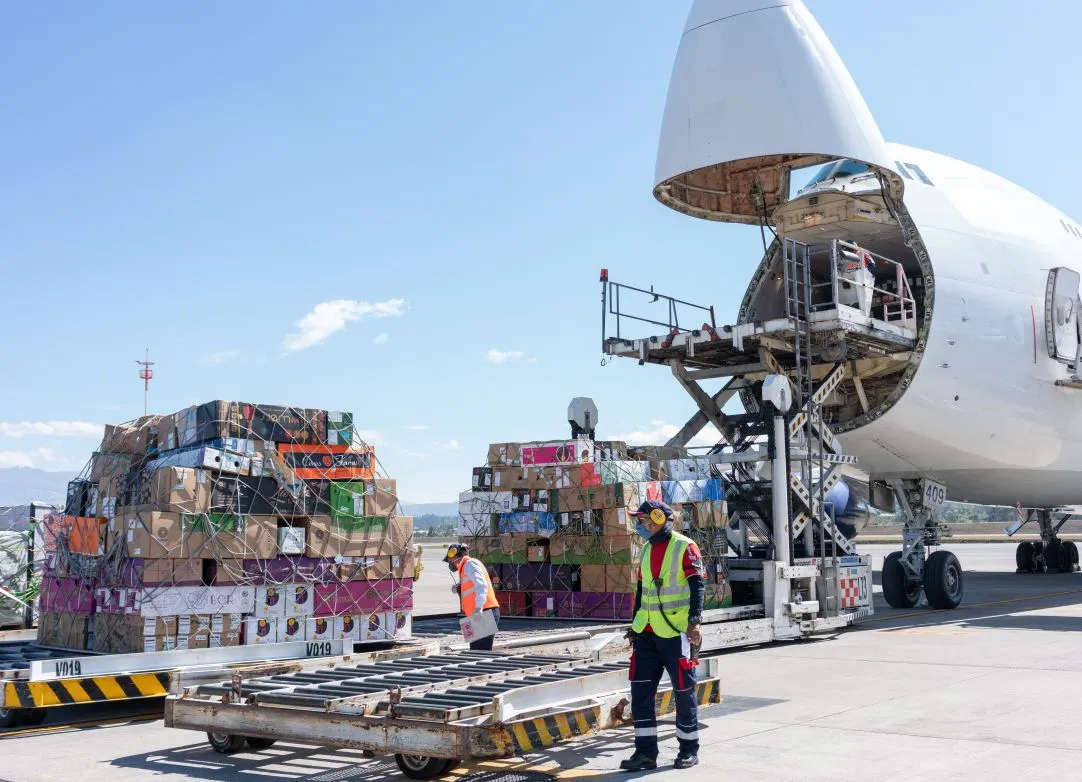
The air cargo industry has evolved into one of the most competitive sectors in global logistics. Airlines are expected to maximize profitability while adapting to changing market conditions, fluctuating demand, and increasingly sophisticated customer expectations. In this environment, traditional sales methods are no longer enough. Commercial success now depends on the ability to collect, interpret, and act on data before competitors do. This is where cargo sales intelligence has become one of the most valuable assets for airlines and General Sales and Service Agents (GSSAs).
Rather than relying solely on historical booking trends or customer relationships, airlines now use cargo sales intelligence to understand market dynamics, identify profitable trade lanes, optimize pricing strategies, and improve customer targeting. Combined with experienced GSSA partners, these insights allow airlines to make proactive commercial decisions that improve both revenue and long-term competitiveness.
As digital transformation continues to reshape aviation, airlines that invest in intelligent, data-driven commercial strategies will be better positioned to grow, expand, and respond to market opportunities.
What Is Cargo Sales Intelligence?
Cargo sales intelligence is the process of collecting, analyzing, and applying commercial and operational data to improve cargo sales performance. It combines multiple sources of information—including customer behavior, booking trends, market conditions, pricing activity, and competitive analysis—to help airlines make better commercial decisions.
Unlike traditional reporting, which focuses on historical performance, cargo sales intelligence provides forward-looking insights that support strategic planning and sales execution.
A comprehensive cargo sales intelligence strategy typically includes:
- Customer demand analysis
- Booking behavior
- Trade lane performance
- Pricing intelligence
- Competitor benchmarking
- Seasonal forecasting
- Commodity trends
- Market opportunity analysis
Organizations such as International Air Transport Association continue to highlight data analytics as one of the key drivers of future cargo competitiveness.
For airlines, intelligence is no longer optional—it has become essential for maintaining profitable cargo operations.
Why Traditional Cargo Sales Are No Longer Enough
The cargo market changes rapidly. Global trade patterns shift, customer priorities evolve, and economic conditions influence demand almost daily.
Without cargo sales intelligence, airlines often face challenges such as:
- Selling capacity below market value
- Missing emerging trade opportunities
- Reacting too slowly to market changes
- Poor customer segmentation
- Inefficient sales allocation
Traditional sales methods typically depend on experience and historical relationships. While these remain valuable, they must now be supported by reliable commercial intelligence.
Today’s most successful cargo organizations combine human expertise with advanced analytics to improve decision-making across every stage of the sales process.
Understanding Customer Demand Through Data
Every booking provides valuable information.
Modern cargo sales intelligence allows airlines to analyze:
- Which commodities are growing
- Which customers generate the highest profitability
- Which trade lanes offer expansion opportunities
- Which industries are increasing cargo demand
This deeper understanding enables sales teams to prioritize customers who create long-term value rather than focusing solely on shipment volume.
Customer demand analysis also allows airlines to anticipate future opportunities before competitors recognize them.
This strategy complements our cargo sales optimization strategies article, where commercial execution is strengthened through better customer targeting and smarter sales planning.
Transforming Market Data into Revenue
Data becomes valuable only when it leads to better commercial decisions.
Through effective cargo sales intelligence, airlines can identify:
- High-performing trade lanes
- Emerging export markets
- Seasonal cargo opportunities
- Premium customer segments
- New industry demand
Rather than waiting for bookings to increase naturally, commercial teams proactively pursue profitable opportunities supported by real market evidence.
This approach aligns closely with our cargo market intelligence insights, where market intelligence is transformed into measurable commercial performance.
The combination of regional expertise and analytics enables airlines to grow revenue with greater confidence.
Pricing Decisions Become Smarter
Pricing remains one of the strongest drivers of airline profitability.
Through cargo sales intelligence, commercial teams gain visibility into:
- Competitor pricing
- Customer purchasing behavior
- Market demand fluctuations
- Capacity availability
- Historical pricing performance
Instead of applying static pricing models, airlines can implement dynamic pricing strategies based on actual market conditions.
This directly supports the concepts discussed in our cargo revenue management systems article, where intelligent pricing contributes to stronger yields and sustainable profitability.
Better pricing decisions help airlines maximize revenue without sacrificing competitiveness.
Supporting Revenue Growth
Increasing revenue requires more than filling available aircraft space.
Modern airlines focus on improving:
- Revenue per shipment
- Revenue per kilogram
- Customer lifetime value
- Yield performance
- Market share
Using cargo sales intelligence, airlines can identify customers willing to pay for premium services, prioritize higher-yield commodities, and develop long-term commercial relationships.
This strategy complements our air cargo revenue strategies article, where commercial alignment and data-driven planning help airlines maximize profitability.
Revenue growth becomes more sustainable when supported by intelligence rather than short-term pricing decisions.
Demand Forecasting Strengthens Sales Planning
One of the greatest advantages of cargo sales intelligence is its ability to improve forecasting accuracy.
Instead of relying solely on historical booking trends, airlines combine:
- Economic indicators
- Industry activity
- Customer demand
- Seasonal cycles
- Regional market developments
Through advanced cargo demand forecasting, airlines can anticipate market changes before they occur.
This enables commercial teams to:
- Prepare for peak seasons
- Identify slower demand periods
- Allocate sales resources effectively
- Adjust pricing proactively
Forecasting transforms sales planning from reactive management into strategic commercial leadership.
Capacity Decisions Backed by Intelligence
Sales and operations cannot function independently.
One of the greatest benefits of cargo sales intelligence is the ability to connect commercial planning with operational execution.
When airlines understand future demand, they can improve:
- Capacity allocation
- Aircraft utilization
- Route planning
- Load factors
- Resource management
These concepts are explored further in our cargo capacity optimization and capacity planning strategies articles.
Aligning sales intelligence with capacity planning allows airlines to maximize profitability while improving service reliability.
Network Optimization Starts with Better Intelligence
A successful airline network is built on more than aircraft schedules—it is built on informed commercial decisions. Cargo sales intelligence gives airlines the visibility they need to understand which routes consistently generate profitable cargo, which markets are expanding, and where additional capacity can produce the highest return.
Instead of relying on historical assumptions, airlines can continuously evaluate:
- Route profitability
- Cargo demand by region
- Customer concentration
- Commodity flows
- Market seasonality
- Competitive capacity
These insights enable carriers to strengthen existing routes while identifying new opportunities for expansion.
Our cargo network optimization strategies article explains how airlines combine operational planning with commercial intelligence to build stronger global cargo networks.
When sales data and network planning work together, airlines improve both efficiency and long-term profitability.
Specialized Cargo Creates Higher-Value Sales Opportunities
Not all cargo shipments generate the same value. One of the most important applications of cargo sales intelligence is identifying industries that consistently produce premium yields.
Today’s fastest-growing cargo sectors include:
- Pharmaceuticals
- Electric vehicle batteries
- Aerospace components
- Medical equipment
- Semiconductor manufacturing
- Luxury goods
- High-value electronics
Each of these industries has unique logistics requirements and purchasing behaviors. By understanding these characteristics, airlines can create targeted commercial strategies that improve customer acquisition and increase revenue.
Our specialized cargo niches article explores how airlines are expanding into premium cargo markets, while our specialized air cargo solutions article explains why these sectors continue to outperform traditional freight markets.
Using cargo sales intelligence, airlines can identify which specialized industries offer the greatest long-term potential and develop customized commercial programs that strengthen customer loyalty.
GSSAs Transform Data into Commercial Action
Technology provides valuable information, but local expertise transforms that information into business opportunities.
This is where General Sales and Service Agents play an increasingly strategic role.
Experienced GSSAs combine cargo sales intelligence with:
- Regional market knowledge
- Freight forwarder relationships
- Customer feedback
- Competitive awareness
- Industry expertise
Because GSSAs work directly with local customers every day, they often identify changes in demand before they appear in market reports.
This allows airlines to react faster and make smarter commercial decisions.
Our GSSA services article explains how modern GSSAs have evolved into commercial growth partners, while our airline representation strategies article explores their expanding role within global cargo markets.
The combination of technology and local expertise creates a significant competitive advantage.
Expanding Into New Cargo Markets
Entering a new region successfully requires more than launching additional flights.
Airlines must understand:
- Local industries
- Customer expectations
- Freight forwarder networks
- Market demand
- Competitive positioning
Using cargo sales intelligence, commercial teams can evaluate whether a market offers sufficient demand before committing additional resources.
This intelligence helps airlines reduce risk while increasing the probability of successful expansion.
Our GSSA cargo markets strategies article demonstrates how airlines combine market intelligence with experienced GSSA partners to accelerate growth in emerging cargo regions.
Well-informed expansion decisions create stronger commercial performance and more sustainable long-term growth.
Artificial Intelligence Is Reshaping Cargo Sales
Artificial intelligence is rapidly transforming the way airlines apply cargo sales intelligence.
Modern AI-powered platforms can analyze millions of data points in seconds, helping commercial teams identify opportunities that would otherwise remain hidden.
Artificial intelligence now supports:
- Predictive demand forecasting
- Dynamic pricing
- Customer segmentation
- Booking trend analysis
- Capacity recommendations
- Revenue optimization
Rather than replacing commercial teams, AI enhances decision-making by providing faster, more accurate insights.
As AI technology continues to evolve, airlines will increasingly rely on intelligent systems to support strategic planning and improve cargo sales performance.
Digital Transformation Improves Decision-Making
Digital transformation has fundamentally changed how airlines manage commercial operations.
Today’s cargo organizations utilize:
- Customer relationship management platforms
- Business intelligence dashboards
- Predictive analytics software
- Automated reporting systems
- Real-time booking visibility
- Data visualization tools
According to Statista, digital technologies continue transforming logistics, transportation, and supply chain management worldwide.
These technologies allow airlines to respond more quickly to market changes while improving the quality of commercial decisions.
Instead of relying on static reports, airlines can monitor performance continuously and adjust strategies in real time.
Collaboration Drives Better Results
The most successful airlines recognize that cargo sales intelligence should not remain isolated within the sales department.
Instead, intelligence should be shared across:
- Revenue management
- Capacity planning
- Network development
- Marketing
- Customer service
- Executive leadership
When commercial intelligence is integrated throughout the organization, every department contributes to stronger cargo performance.
Organizations such as The International Air Cargo Association continue to promote collaboration and data sharing as essential drivers of innovation within the cargo industry.
Integrated decision-making allows airlines to respond faster while improving customer satisfaction and financial performance.
How BlueX GSSA Uses Cargo Sales Intelligence
At BlueX GSSA, cargo sales intelligence is more than a reporting tool—it is the foundation of every commercial decision.
BlueX combines advanced analytics with regional expertise to help airline partners:
- Identify profitable cargo opportunities
- Develop stronger customer relationships
- Optimize pricing strategies
- Improve capacity utilization
- Expand into emerging cargo markets
- Increase sales performance
- Strengthen competitive positioning
By combining local market intelligence with global commercial strategy, BlueX helps airlines transform data into measurable business growth.
Rather than reacting to market conditions, BlueX enables airlines to anticipate change and capitalize on opportunities before competitors do.
Frequently Asked Questions
What is cargo sales intelligence?
Cargo sales intelligence is the process of using commercial data, customer insights, pricing trends, and market analytics to improve airline cargo sales performance, increase revenue, and support better strategic decisions.
Why is cargo sales intelligence important for airlines?
It helps airlines identify profitable markets, optimize pricing, forecast demand, improve customer targeting, and make proactive commercial decisions that increase long-term profitability.
How do GSSAs use cargo sales intelligence?
GSSAs combine regional market expertise with commercial data to help airlines improve customer relationships, identify new business opportunities, optimize sales strategies, and strengthen market presence.
How does cargo sales intelligence improve airline revenue?
By supporting smarter pricing, better demand forecasting, improved capacity utilization, and stronger customer segmentation, cargo sales intelligence enables airlines to maximize revenue while reducing commercial risk.
Conclusion
In today’s highly competitive cargo environment, information has become one of an airline’s most valuable commercial assets. Cargo sales intelligence enables airlines to understand customer behavior, optimize pricing, improve forecasting, strengthen capacity planning, and identify new market opportunities with greater confidence.
As digital technologies, artificial intelligence, and predictive analytics continue to evolve, airlines that embrace data-driven decision-making will outperform competitors that rely on traditional commercial models.
Working alongside experienced GSSA partners further strengthens these capabilities by combining advanced analytics with local market expertise and customer relationships.
At BlueX GSSA, intelligence is transformed into action through strategic planning, commercial execution, and market expertise. By integrating cargo sales intelligence across every stage of the customer journey, airlines can improve profitability, strengthen global competitiveness, and build resilient cargo businesses prepared for the future.
The future of airline cargo sales belongs to organizations that make smarter decisions faster. Those decisions begin with better data, stronger partnerships, and a commitment to turning intelligence into sustainable commercial growth.